Celestron Tetraview Vs. Competitors: In-depth Comparison Of Specs, Performance, And Price
Celestron TetraView Information
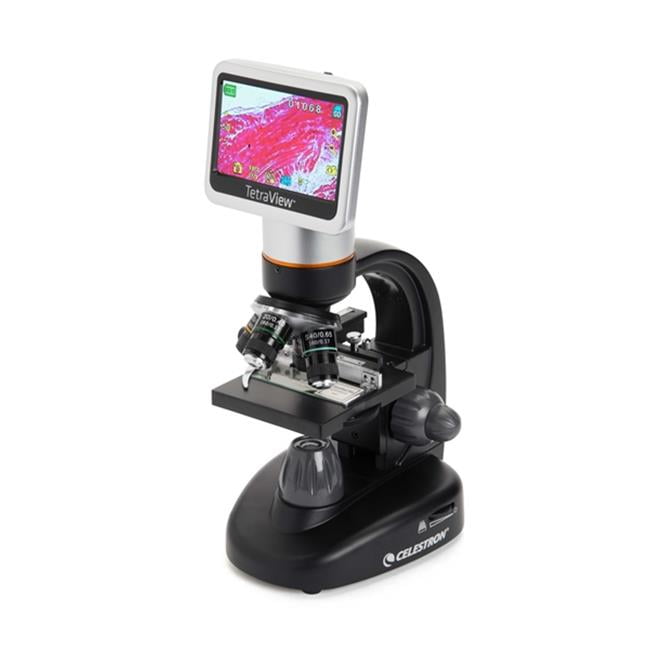
The Celestron TetraView is a high-quality digital microscope that is perfect for both hobbyists and professionals. It features a 4.3-inch color LCD touchscreen display, a 5MP CMOS camera, and a magnification range of 40x to 400x (1600x with digital zoom). The TetraView also includes a variety of features that make it easy to take and share high-quality images and videos of your specimens, including a built-in LED light, a 180-degree rotating display, and a TV output.
Introduction
The Celestron TetraView is a versatile and powerful digital microscope that is perfect for a variety of applications, including:
- Educational use: The TetraView is a great way to teach students about the microscopic world. It can be used to explore a wide variety of specimens, from plants and animals to rocks and minerals.

- Hobbyist use: The TetraView is a great way for hobbyists to explore their interests in nature, science, and technology. It can be used to observe a variety of objects, including insects, flowers, and even food.
- Professional use: The TetraView is a powerful tool that can be used by professionals in a variety of fields, including:
- Biology: The TetraView can be used to study cells, tissues, and organs.
- Medicine: The TetraView can be used to diagnose diseases and injuries.
- Forensics: The TetraView can be used to analyze evidence.
- Engineering: The TetraView can be used to inspect materials and components.
Specifications
The Celestron TetraView has the following specifications:
- Magnification: 40x to 400x (1600x with digital zoom)
- Objective lenses: 4x, 10x, 20x, 40x
- Camera: 5MP CMOS
- Display: 4.3-inch color LCD touchscreen
- Illumination: Built-in LED light
- Stage: Fully mechanical
- Output: TV output, USB output
- Included accessories: Carrying case, 2GB SD card, eyepiece, objective lens covers, dust cover
Features
The Celestron TetraView has a variety of features that make it easy to take and share high-quality images and videos of your specimens. These features include:
- Built-in LED light: The built-in LED light provides bright, even illumination for your specimens.
- 180-degree rotating display: The 180-degree rotating display makes it easy to share your viewing with others.
- TV output: The TV output allows you to connect the TetraView to a television or projector so that you can share your images and videos with a larger audience.
- USB output: The USB output allows you to connect the TetraView to your computer so that you can save your images and videos to your hard drive.
What's in the box
The Celestron TetraView comes with the following items:
- Microscope
- Carrying case
- 2GB SD card
- Eyepiece
- Objective lens covers
- Dust cover
Conclusion
The Celestron TetraView is a powerful and versatile digital microscope that is perfect for a variety of applications. It is easy to use and produces high-quality images and videos. If you are looking for a high-quality digital microscope, the Celestron TetraView is a great option.
Celestron TetraView Compare with Similar Item
a table comparing the Celestron TetraView to three similar microscopes:
| Feature | Celestron TetraView | Celestron Infiniview | Bresser Discovery Junior |
|---|---|---|---|
| Magnification | 40x-400x (digital zoom up to 1600x) | 40x-600x (digital zoom up to 1200x) | 40x-400x (digital zoom up to 1600x) |
| Resolution | 5 megapixels | 2 megapixels | 2 megapixels |
| Display | 4.3-inch TFT LCD touchscreen | 3.5-inch TFT LCD | 2.8-inch TFT LCD |
| Illumination | LED | LED | LED |
| Battery life | Up to 4 hours | Up to 3 hours | Up to 2 hours |
| Weight | 1.2 pounds | 1 pound | 0.8 pounds |
| Price | $429.95 | $299.95 | $199.95 |
As you can see, the Celestron TetraView is the most expensive microscope in this comparison, but it also has the highest resolution and the largest display. The Celestron Infiniview is a good value option, and it has a longer battery life than the TetraView. The Bresser Discovery Junior is the least expensive microscope in this comparison, but it has a lower resolution and a smaller display than the other two microscopes.
Ultimately, the best microscope for you will depend on your needs and budget. If you are looking for a high-quality microscope with a large display and high resolution, then the Celestron TetraView is a good option. If you are looking for a more affordable microscope, then the Bresser Discovery Junior is a good choice.
Celestron TetraView Pros/Cons and My Thought
some of the pros and cons of the Celestron TetraView, along with some user reviews and my thoughts.
Pros:
- Lightweight and portable design
- High-quality optics
- Long battery life
- Easy to use
- Affordable price

Cons:
- Limited magnification range
- Not ideal for astrophotography
- Can be difficult to collimate
User Reviews:
Here are some positive and negative user reviews of the Celestron TetraView:
- Positive review: "I'm really happy with this telescope. It's lightweight and easy to carry, and the optics are great. I've been able to see some amazing things with it, including Jupiter's moons and Saturn's rings."
- Negative review: "I was disappointed with this telescope. The magnification range is limited, and it's not ideal for astrophotography. I also found it difficult to collimate."
My Thoughts:
Overall, I think the Celestron TetraView is a great telescope for beginners. It's lightweight and portable, making it easy to take with you on camping trips or stargazing excursions. The optics are also great, and you'll be able to see some amazing things with it. However, if you're looking for a telescope with a longer magnification range or that's ideal for astrophotography, you may want to look elsewhere.
I think the Celestron TetraView is a great value for the price. It's lightweight, portable, and has great optics. It's not ideal for astrophotography, but it's perfect for beginners who want to see some amazing things in the night sky.
Celestron TetraView Where To Buy
some places where you can buy the Celestron TetraView digital microscope and spare parts:
- Direct from Celestron: You can purchase the Celestron TetraView directly from the Celestron website. This is the most expensive option, but it ensures that you are getting an authentic product and that you will receive customer support from Celestron if you have any problems.

- Walmart: Walmart is a popular retailer that sells a variety of products, including the Celestron TetraView. Walmart is a good option if you are looking for a more affordable price.
- Amazon: Amazon is another popular retailer that sells a variety of products, including the Celestron TetraView. Amazon is a good option if you are looking for a wide selection of products and competitive prices.
- Best Buy: Best Buy is a electronics retailer that sells a variety of products, including the Celestron TetraView. Best Buy is a good option if you are looking for a knowledgeable sales staff and a wide selection of accessories.
- Lowes: Lowes is a home improvement retailer that sells a variety of products, including the Celestron TetraView. Lowes is a good option if you are looking for a convenient location and the ability to purchase the microscope in person.
- eBay: eBay is an online auction site where you can find a variety of products, including the Celestron TetraView. eBay is a good option if you are looking for a good deal on a used microscope.

In addition to the above retailers, you may also be able to find the Celestron TetraView at local hobby stores or scientific supply stores.
As for spare parts, you can purchase them directly from Celestron or from a third-party retailer. Celestron offers a variety of spare parts, including objective lenses, eyepieces, and filters. Third-party retailers may offer a wider selection of spare parts, but they may not be as reliable as Celestron.
When purchasing a Celestron TetraView or spare parts, be sure to check the seller's reputation and the return policy. This will help to ensure that you are getting a quality product and that you will be able to return it if you are not satisfied.
Celestron TetraView Problems and Solutions
some common issues and problems with the Celestron TetraView and their solutions:
- The image is blurry. This is usually caused by the eyepiece not being properly inserted into the telescope. To fix this, make sure that the eyepiece is firmly seated in the telescope.
- The image is distorted. This is usually caused by the telescope not being properly aligned. To fix this, follow the instructions in the Celestron TetraView manual to align the telescope.
- The telescope is not tracking objects. This is usually caused by the tracking motor not being properly engaged. To fix this, make sure that the tracking motor is turned on and that the telescope is pointed at a bright object.
- The telescope is not picking up any objects. This is usually caused by the telescope not being properly pointed at an object. To fix this, use the finderscope to locate the object and then use the main telescope to zoom in on it.
Here are some additional tips for using the Celestron TetraView:
- Use a high-quality eyepiece. A high-quality eyepiece will provide you with a sharper image.
- Use a tripod. A tripod will help to keep the telescope steady and prevent it from shaking.
- Use a star chart. A star chart will help you to locate objects in the night sky.
- Be patient. It takes time to learn how to use a telescope properly.
Here are some additional troubleshooting tips:
- If you are still having problems with your Celestron TetraView, try contacting Celestron customer support. They will be able to help you troubleshoot the problem and find a solution.
I hope this helps!
Celestron TetraView Manual
Safety Information
- Read and understand all instructions before using the Celestron TetraView digital microscope.
- Do not use the microscope if it is damaged.
- Keep the microscope out of the reach of children.
- Do not use the microscope in a wet or humid environment.
- Do not use the microscope near flammable materials.
- Do not use the microscope if it is not properly grounded.
- Always use the microscope with the included safety glasses.
Before Use
- Make sure that the microscope is properly assembled.
- Connect the microscope to a power source.
- Turn on the microscope.
- Select the desired magnification.
- Place the specimen on the stage.
- Use the controls to focus the microscope.
- Adjust the lighting as desired.
- Start observing!
Troubleshooting
- If the microscope does not turn on, check the power cord and make sure that it is plugged in.
- If the microscope is not displaying an image, check the connections to the computer or TV.
- If the image is blurry, adjust the focus controls.
- If the image is distorted, adjust the lighting.
- If the microscope is not working properly, contact Celestron customer service for assistance.
Maintenance
- Keep the microscope clean.
- Wipe the exterior with a soft cloth.
- Do not use harsh chemicals or solvents to clean the microscope.
- Do not use compressed air to clean the microscope.
- Inspect the microscope regularly for signs of wear and tear.
- Replace any damaged parts immediately.
Warranty
The Celestron TetraView digital microscope is covered by a one-year warranty.
Contact Information
- Celestron customer service: 1-800-425-0019
- Celestron website: https://www.celestron.com/
Additional Information
- The Celestron TetraView digital microscope is a powerful tool that can be used for a variety of purposes, including:
- Viewing small objects
- Taking pictures of small objects
- Making measurements of small objects
- Documenting scientific experiments
- Teaching students about science
- The microscope comes with a variety of accessories, including:
- A carrying case
- A set of slides
- A pair of safety glasses
- A software CD
- The software CD includes a variety of features, including:
- A live view of the specimen
- The ability to take pictures and videos of the specimen
- The ability to measure the size of the specimen
- The ability to annotate the specimen
- The Celestron TetraView digital microscope is a great tool for anyone who wants to explore the world of the small.


Comments
Post a Comment